
What damage can look like.
Compare leaf patterns and crown condition before deciding on your next step.
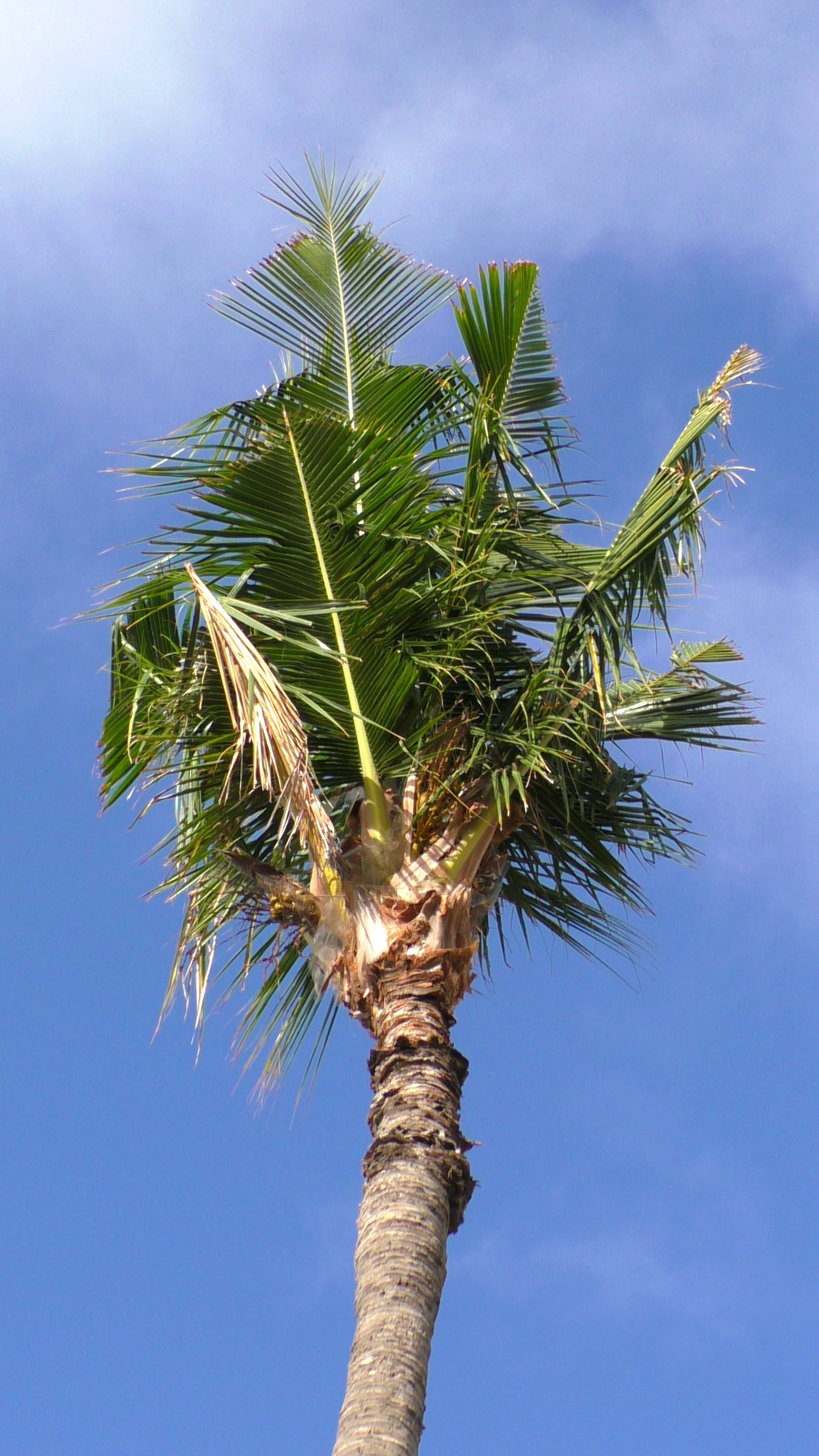

Read the leaves.
See the whole tree.
- V-shaped notches: feeding on folded growth can become visible as angular gaps when fronds open.
- Bore holes: examine accessible areas around the crown for entry holes and disturbed material.
- Fan palms: damage can appear as scalloped edges or a repeated “snowflake” pattern.
- Canopy condition: record new damage and changes over time, alongside wider photographs.
These signs support an assessment; they do not establish the cause of every damaged palm. Seek identification help when uncertain.
Photograph safely from the ground.
Take a whole-tree view, a crown view, and close details where safely accessible. Keep dates and locations with your images. Leave climbing and inspection of unstable palms to qualified professionals.
Use the observation checklistSources & reading notes
Reviewed October 22, 2026. Aloha Organic summaries draw on the sources below.
How damage becomes visible.
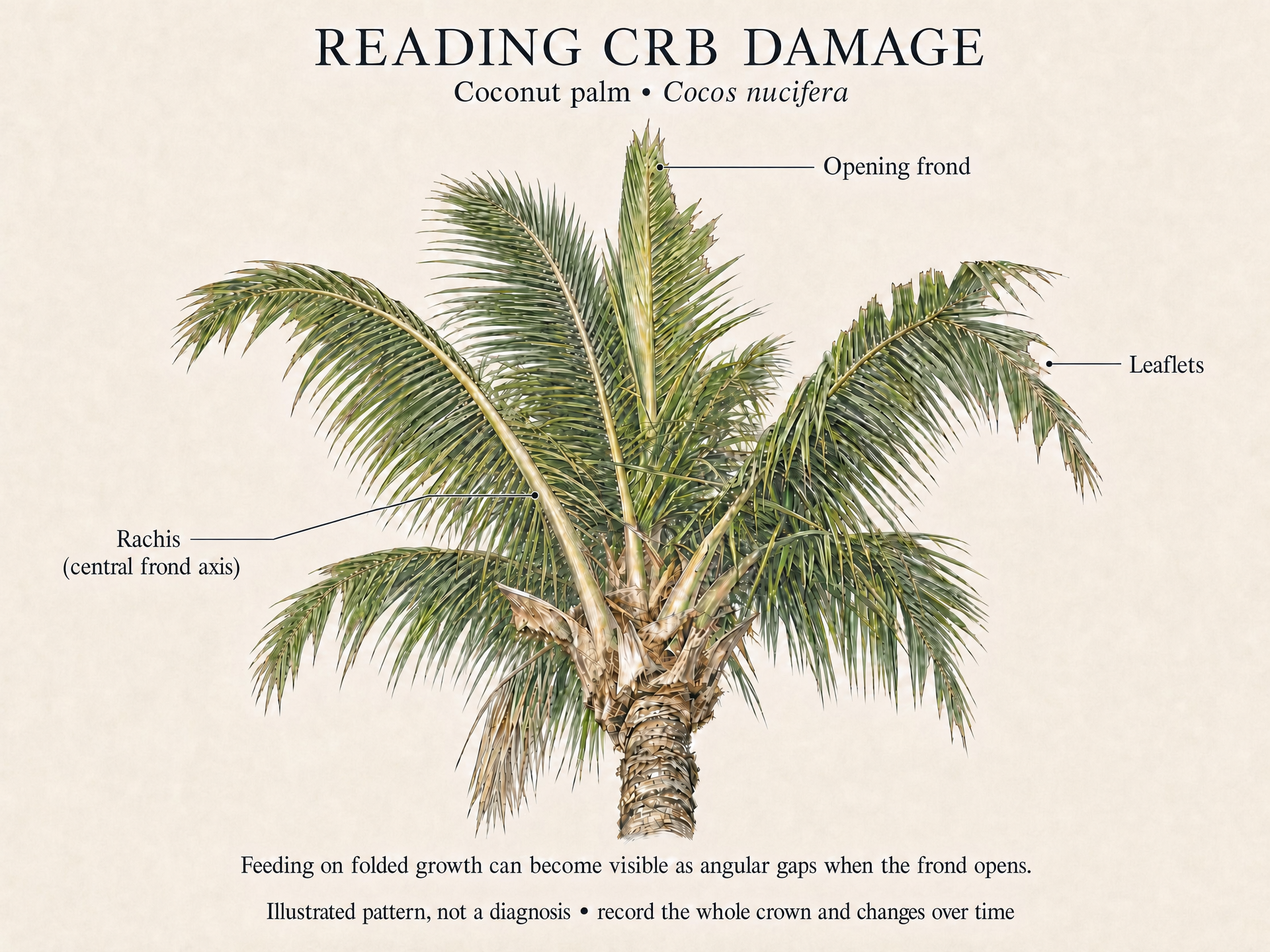
What each part tells you.
Open a label for a plain-language explanation.
Opening frond
An upright young leaf unfolding from the crown. Earlier feeding on folded tissue may become visible as it opens.
V-shaped cuts
Angular areas of missing leaf tissue can appear across groups of leaflets. They are not simply the normal spaces between fronds.
Leaflets
The narrow blades arranged along a coconut frond give it its feather-like shape.
Rachis
The central axis of a frond, supporting the leaflets along either side.
Palm crown
The entire leafy top of the palm. Photograph this whole structure as well as individual damage details, and compare new growth over time.
Anatomy and size reference: SPC manual, chapter 2 . Generated educational interpretations are shown beside real reference photographs.
Feeding in folded growthAdults bore into the crown and feed on developing tissue. Later leaf emergence can reveal the injury.
Angular gaps in open frondsLook for repeated V-shaped cuts across leaflets. Keep a whole-crown image alongside the close detail.
Revisit and compareA damaged frond records earlier feeding. Date photographs and compare new growth; a single pattern does not explain every declining palm.
For the manual’s original photographs and diagrams, read damage recognition, printed pages 10–13