
Look closely. Compare the details.
A labeled worker illustration, a real specimen reference, and the features that matter for identification.
← All field guides · Coconut & CRB guide
Begin with
the worker.
Workers are about 1.5 mm long, usually golden to light brown. Small size and color are clues, not confirmation. A useful identification combines the antennae, waist, and rear-body structures.
Do not test an ant by letting it sting you. Photograph it with a size reference, then preserve a labeled sample for identification.
Prepare an observation record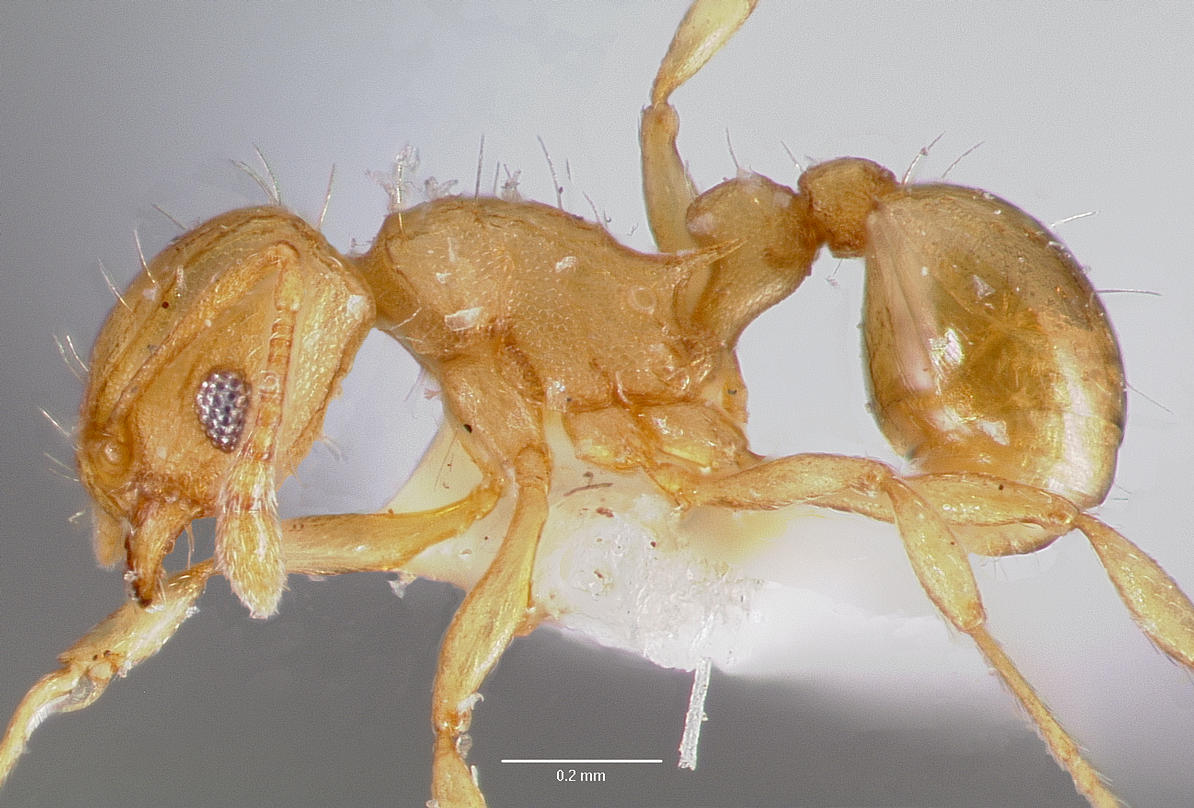

A guide to the visible parts.
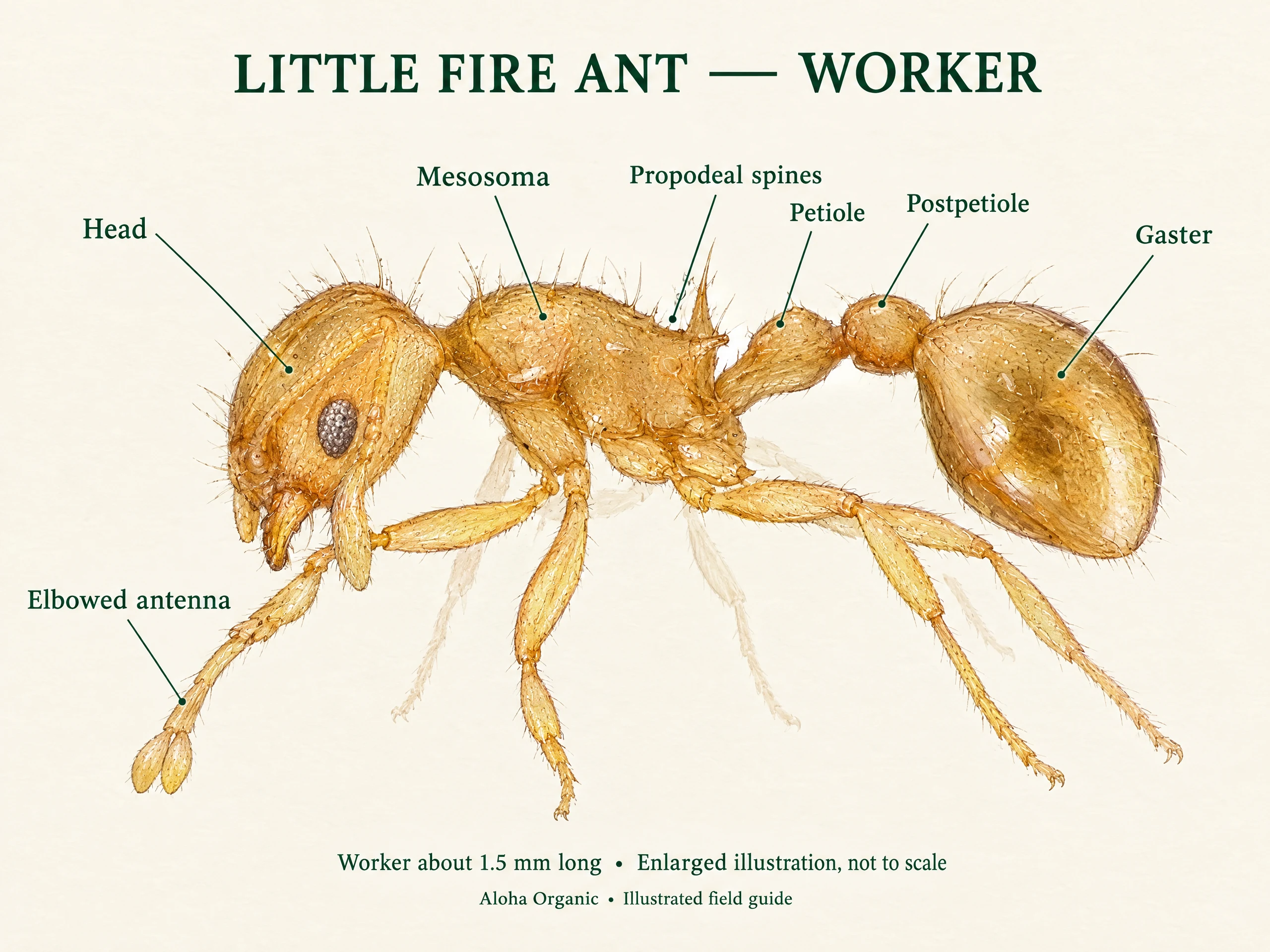
Antennae
Workers have 11 antennal segments, ending in a two-segmented club. Fine segment counts need magnification.
Mesosoma
The middle body region carries the legs. A side view reveals its profile.
Propodeal spines
Look for the paired spines at the rear of the mesosoma, before the narrow waist.
Petiole and postpetiole
These are the two waist segments between the mesosoma and the gaster.
Gaster
The rounded rear body region. Its outline alone cannot identify the species.
Head and eyes
Keep a face-on photograph as well as a side view when possible.
Put small size in perspective.
Relative lengths on a shared scale, not a physical ruler. Queens and workers differ in shape as well as size. Screen size changes the displayed lengths.
Sources & reading notes
Reviewed October 23, 2026. Guidance is written by Aloha Organic; sources retain their original authorship.