
Survey first. Keep a useful record.
A step-by-step observation guide for a farm, garden, nursery, or community growing space.
← All field guides · Coconut & CRB guide
A survey you
can repeat.
Use food lures to collect information, not to infer that a property is ant-free from one negative result. This is an observation procedure, not a pesticide mixture.
Prepare labeled stations.
Use disposable sticks with a thin smear of peanut butter. Avoid peanut products where allergies are a concern; ask an identification service about an alternative lure.
Choose sheltered places.
Sample shady areas around incoming plants, pots, walls, and accessible vegetation. For a boundary survey, BIISC describes spacing sticks about 10 feet apart. Keep a sketch and station numbers.
Time the visit.
Survey in the cooler morning or late afternoon. Leave lures for 30–60 minutes. Record the conditions and actual exposure time so future checks are comparable.
Contain and identify.
Seal collected sticks in labeled zipper bags and freeze for 24 hours before arranging sample identification. Retrieve every lure. Do not move live ants or suspect plants to another property.
Record every station.
Keep negative and uncertain observations as well as positives. An empty lure means “none detected here this time,” not proof of absence.
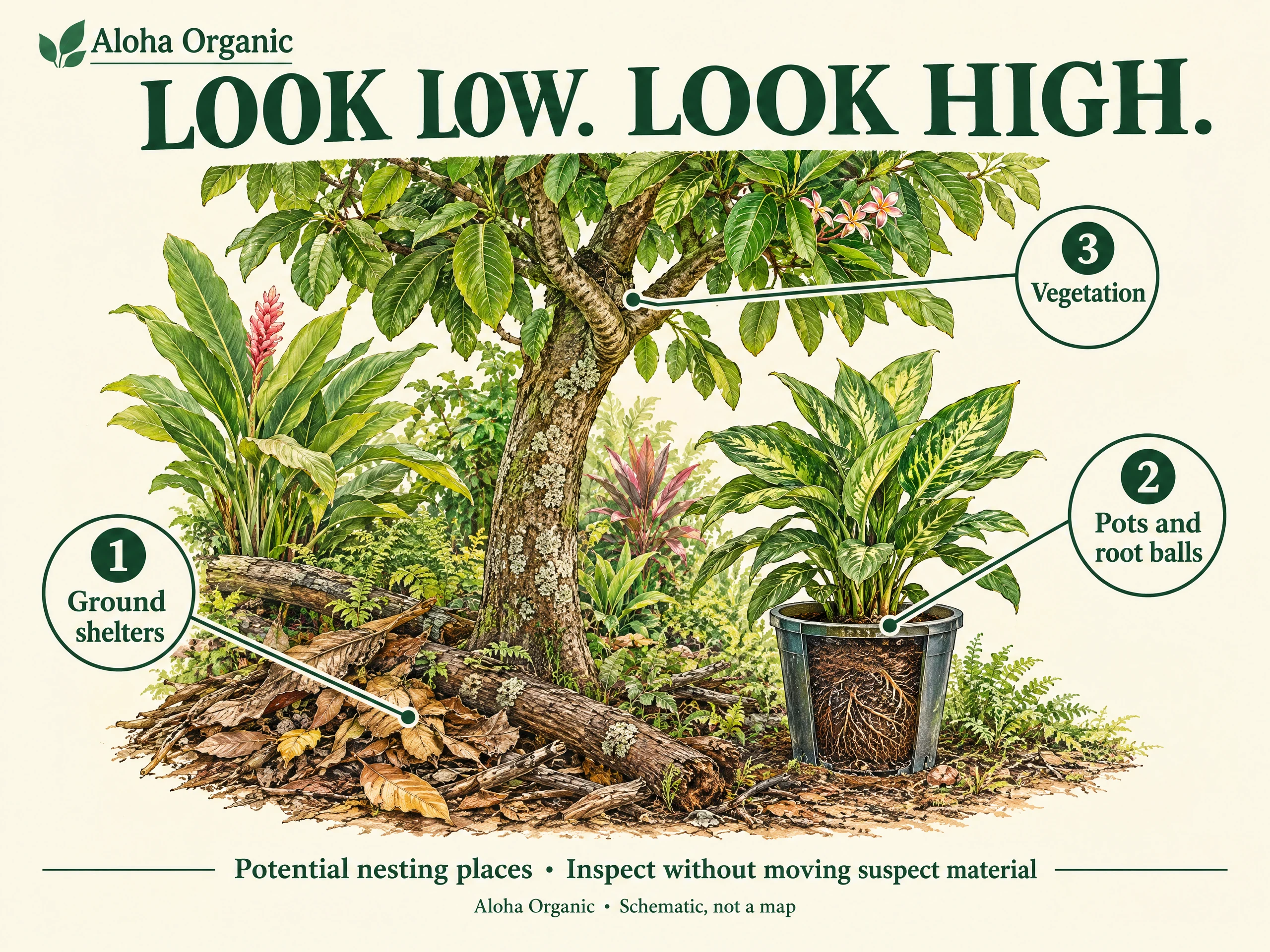
Give each visit a purpose.
Examples: check a new plant delivery, revisit a previous detection, or compare the same stations after a management action. Write that purpose before you begin.
Build a survey recordSources & reading notes
Reviewed October 23, 2026. Guidance is written by Aloha Organic; sources retain their original authorship.