Read the signs in their setting.
Document ant activity, crop relationships, and effects on people without assuming every problem has the same cause.
← All field guides · Coconut & CRB guide
Notice the setting.
Record the effect.
LFA can affect the people working a site as well as its ecological relationships. A record should separate what you observed from what you think caused it.
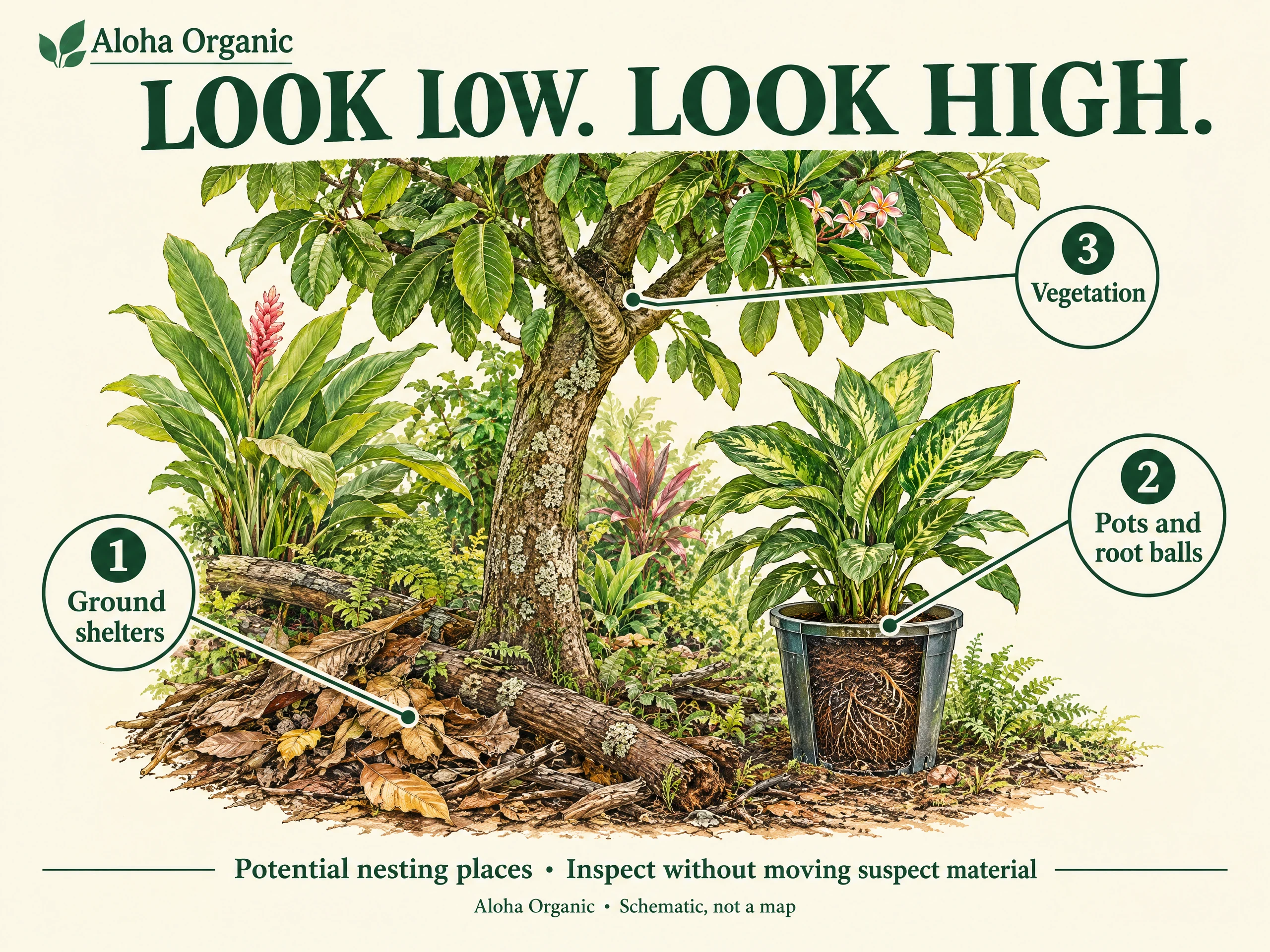
- Ant activity on plants, pots, sheltered surfaces, and accessible branches.
- Where and when people encountered stinging ants.
- Ants attending sap-feeding insects; photograph both organisms.
- Changes in activity between dated surveys.
Plant damage needs context.
In Solomon Islands gardens, researchers found more taro planthoppers where LFA were present. That relationship deserves attention, but it does not make a damaged taro leaf an LFA diagnostic sign. Record the crop, other insects, and growing conditions.
Read the garden studyProtect people and animals during observation.
Avoid disturbing overhead vegetation or handling ants with bare hands. Keep children and pets away from sample stations. Seek appropriate medical or veterinary help for an injury; this guide does not diagnose reactions.
Sources & reading notes
Reviewed October 23, 2026. Guidance is written by Aloha Organic; sources retain their original authorship.